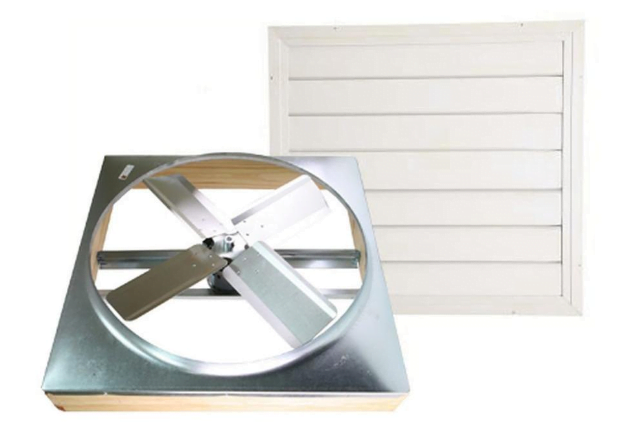
Traditional or Older Style Whole House Fans

A Whole House Fan Company
State power regulators decided today (May 15, 2015) how to divvy up the biggest electric rate hike in California history, boosting California energy rates by as much as 80 percent for residential customers who use the most power.
More than half of the residential ratepayers served by the state’s two largest utilities will see no increase at all in their rates. But for those who consume the most, the new rates translate into an average increase of $85 per month for electricity.
The plan, approved 3-2 by the state Public Utilities Commission, affects about 9 million customers of the state’s two largest utilities, Pacific Gas and Electric Co. and Southern California Edison Co.
The new California energy rate increase, which will appear on June bills, was approved seven weeks after the PUC mandated a $5 billion rate hike. The plan’s passage came after a week of intense lobbying by industrial, commercial, agricultural and residential groups — all trying to influence how the PUC would allocate the rate hikes.
Big Loss for Big Users
The average energy rate increase for all residential customers of the two utilities is 19 percent. But low-income ratepayers and those who use the least electricity will face no rate hike at all.
The biggest losers are the biggest users.
Residential ratepayers are divided into five tiers, and those in PG&E’s top tier — about 9 percent of that utility’s residential customers — will see electric rates jump from 14.3 cents to 25.8 cents per kilowatt hour. That’s an 80 percent increase.
That translates into an average increase of $85 — from $232 to $317 — on monthly bills.
For Edison’s heaviest residential users, the rate hike is 71 percent or an average increase from $194 to $265 on monthly bills.
Industrial customers of PG&E and Edison face rate hikes of about 50 percent, while commercial and agricultural ratepayers will see less significant increases.
Hike Fuels Protesters
The energy rate increases will be retroactive to March 27 — the day the record rate hikes were approved.
“This is probably the worst economic calamity the state has ever seen,” said David Marshall, chief financial officer at Gregg Industries, a 400-person iron foundry in El Monte. “It has got ramifications well beyond anything that we can begin to understand.”
Today’s vote took place amid the jeers of protesters, who wore tombstone-shaped placards that read: “R.I.P. Affordable Energy.”
PUC Commissioner Jeff Brown bellowed back.
“We cannot walk away from it. We cannot pretend that this is some sort of problem that we can walk away from,” Brown said.
The final plan was a revised version of the plan released by PUC President Loretta Lynch last week. Lynch reworked her plan after an outcry from businesses proclaiming the proposed rate hikes would doom California’s economy and a critical statement from Gov. Gray Davis.
Since it unanimously the approved rate hikes in March, the PUC has crammed a year’s worth of work into six weeks, struggling to fashion rates that simultaneously recoup the $5.2 billion the state has spent buying power for the customers of the state’s two largest utilities and trigger enough conservation to help fend off some of this summer’s expected rolling blackouts.
Customers of San Diego Gas and Electric Co. and those who buy electricity directly from energy wholesalers, such as the California university system, are shielded from rate hikes.
In the past 10 years electrical rates, on average, have increased by 40%. With additional federal regulations and the EPA’s proposed carbon dioxide limits for power plants, the cost of energy is expected to continue to increase significantly for the foreseeable future. For many households, utility costs can be as much as 25% of housing expenses and with air conditioning accounting for up to 50% of that, some people may have to choose between basic necessities such as food or medication and running their air conditioner during a heat wave.
A 2011 survey of low-income households for the National Energy Assistance Directors Association reveals some of the adverse health and welfare impacts of high-energy costs. Low-income households reported these responses to high-energy bills:
∙ 24% went without food for at least one day.
∙ 37% went without medical or dental care.
∙ 34% did not fill a prescription or took less than the full dose.
Although some may think air conditioning is not a necessity, the fact is that heat waves kill more Americans than other natural disasters such as floods, lightning, tornadoes, and hurricanes. In July 1995, Chicago, Illinois experienced a heat wave that caused over 700 deaths. Since 1950 the number of heat waves has increased and heat waves have become longer. The hottest days have become hotter and more frequent. In the contiguous United States, new record high temperatures over the past decade have consistently outnumbered the record lows.
With rising temperatures and increasing cost of energy, many homeowners are looking for alternatives to running their expensive air conditioners in order to stay cool. Although air conditioning continues to be the best solution for staying cool during the day, companies such as CentricAir have given homeowners an alternative during the evening and at night when temperatures outside are cooler than inside. CentricAir has created an energy efficient line of natural cooling and ventilation products that are cost effective for today’s needs. Using precision balanced, acoustically designed fans with industrial grade components and solid-state electronics, CentricAir fans are mounted in the attic on the ceiling and pull cool fresh air into the home through open windows. The hot air inside the home and attic is then forced out through the attic vents. Due to its great cooling efficiency, CentricAir fans bring the temperature inside the home to comfortable level allowing for an enjoyable evening and comfortable nights sleep. They also use a fraction of the energy of a typical home air conditioner making it one of the best home energy efficiency upgrades you can make. To learn more about CentricAir and their ultra quiet and energy efficient products visit www.CentricAir.com
As the air conditioners hum across the county, residents should brace themselves for bigger utility bills.
The Public Utilities Commission on Friday unanimously approved a two-tier plan that will affect more than 30 million people, raising rates on more efficient users while giving a break to big energy users.
“This is really the utilities versus everybody else,” said Evan Gillespie with the Sierra Club California. Published July 4th, 2015 OC Register
A whole-house fan can provide an energy-saving alternative to air-conditioning, particularly when the air outside is cooler than inside. Although such fans don’t remove humidity from the air like an air conditioner, they provide a powerful degree of ventilation throughout your home. Learn more about how a whole house fan works. Follow these step-by-step whole house fan instructions to cool your home:
2. Close any fireplace dampers before turning on the fan to avoid pulling soot into a room.
3. Turn on the whole-house fan when the air outdoors is cool and dry, typically during the evening, at night or early morning hours. Turn off the fan during the day when temperatures outside rise higher than in the home.
4. Open the windows in any particular rooms you wish to cool, closing windows in other rooms. This helps increase the air movement where you need it most.
5. Use optional timers to run your fan for a specific amount of time. Do not use controls that automatically switch on the fan as it is essential that you open windows and close the fireplace damper before operating the fan.
What’s the difference between attic fans and whole house fans?
An attic fan is completely different from a whole house fan. They are smaller fans that are installed on the roof or gable in the attic. They are designed to move air out of your attic area only and are not designed to cool the living space of your home like a whole house fan.
A whole house fan is typically located above the ceiling in a hallway area of a home. In some occasions, they can be located in a wall. The fan is designed to pull cool fresh air into the home through open windows and exhaust the hot stale air out through the attic vents. A whole house fan serves a dual purpose and is designed to cool both the living space and the attic.
Whole house fans work so well that if you operate one all night long, you might just need to sleep with a blanket. They can often cool a house to a comfortable temperature in just several hours.
You can get concentrated cooling with a whole house fan by opening the windows in selected rooms. As the fan operates, it creates a comfortable breeze in the rooms where the windows are open. Warning: Be sure to open windows before you turn on the whole house fan. If you don’t and you have a fireplace with ashes in it, you can create an ash storm as air is sucked down the chimney forcing the dirty ashes through the house as they are pulled toward the whole house fan.
For moderate climates, a whole house fan can reduce your need for air conditioning except on the hottest most humid days. Learn how you can lower AC usage below.
Maximum cooling with a whole house fan
Whenever the outside temperature drops about 10 degrees below the inside temps, open the windows and turn on the fan to pull cool, fresh air inside the home and exhaust the hot stale air out through your attic vents.
For a morning “pre-cool,” run your whole-house fan just before sunrise, then close the windows to seal in the cool air as the day warms up. In the evening when outside temps drops again, turn on your fan to cool off the house.
Whole house fans are very effective in multi-story homes where the heat rises making the upstairs much hotter than down stairs. Also, certain areas of the country have better potential for whole house fan cooling than others.
Design options for whole-house fans
Ceiling-mounted whole house fans are most common. They are typically installed in the attic between the ceiling and living space.
Ducted whole-house fans are quieter than traditional whole house fans because they are mounted in the attic, away from living space.
A two-speed control allows you to quickly flush the hot air out of the house on high speed or create a continuous, gentle breeze on low speed.
Do’s and Don’ts
Make sure your heating and cooling system is turned off.
Windows must be open (without enough ventilation from open windows, the powerful suction can create a dangerous backdraft from gas appliances).
Make sure your whole house fan comes with a damper door to help create an airtight seal. If you don’t have a damper, it will be like leaving a window open.
Benefits
Some municipalities and utility companies offer energy rebates for whole-house fans. According to the Sacramento Municipal Utility District, whole-house fans use about 10% of the energy an air conditioner uses and can pay for themselves in just a few seasons.
A whole-house fan can substitute for an air conditioner most of the year in most climates. Whole-house fans provide acceptable summer comfort for many families, even in hot weather.
How Whole-House Fans Work as a Alternative
The whole-house fan pulls air in from open windows and exhausts it through the attic and roof. It provides good attic ventilation in addition to whole-house ventilation. You can regulate cooling by simply closing windows in the unoccupied areas and opening windows wide in occupied areas. Many people cool the bedrooms at night and the living areas during the daytime.
Cooling Your Home with Fans and Ventilation
Although installing the older style of whole-house fan can be difficult due to extensive framing of the joists in the attic and the need for a dedicated power source, the new style of whole house fan alternatives, like those from Centric Air, require no framing and do not require a dedicated power source. Another draw back of the older type of whole house fans is that they come with a loose cover that opens when the fan turns on and closes with the fan is turns off; however, the covers are not air tight. The new style of ducted whole house fans by Centric Air come with a gravity fed back draft damper and an available power actuated/insulated damper for cold climate region to help ensure an air tight seal with the fan is not operating.
Noise is also an issue with the older style of whole house fans. Some people have compared them to the sound of a helicopter in their attic. CentricAir whole house fans are ultra quiet and designed to operate quietly all night while you are sleeping. For more tips on cooling your home without the use of air conditioning visit: Cooling Your Home With Fans and Ventilation
An experimental study was carried out during the summer to investigate the natural cooling potential of use of a whole house fan in Central Florida’s hot and humid climate.
Before the advent of vapor compression air conditioning, the use of whole house fans was a popular means to enhancing natural ventilation to achieve greater comfort in hot climates. The following study was used to determine the potential cooling effect of using a whole house fan in Florida to improve the effectiveness of natural ventilation. It also extends the empirical results to a more general analysis of the potential savings of a whole house fan used in conjunction with a conventional air conditioning system. To read the full article visit the following Florida Whole House Fan Study

Centric Air, Inc. assembles their high efficient and very quiet whole house fans in the USA. One of the company’s missions is to provide homeowners with a cost effective alternative for cooling their home without the use of expensive air conditioning via their ultra quiet and energy efficient whole house fans.
A second mission of our business is to support veterans by creating opportunities for them to join our team as the company grows. As part owner of Centric Air, Michael W. Goodbrand, a veteran and former U.S. Army infantry soldier with the 3rd Infantry Division, is one of the company’s co-founders along with his partner and brother David Goodbrand. Both Michael and David are committed to providing opportunities for veterans. For example, the associate who has been with the company the longest proudly served in the U.S Marine Corps.
Michael and David, along with CentricAir are proud sponsors of the Wounded Warrior Project
Sometimes it’s hard to know what you’re getting into before you start a DIY project. We don’t want a house fan installation to be one of those bigger-than-expected projects, so we made a Centric Air whole house fan installation video to show you how it’s done. The video and transcript are embedded in the following link whole house fan installation video.
Is your electric bill consistently above $150 a month?
If so, installing a solar power system on your roof could save you some money. But before you decide to go solar, you first must face a complicated array of options: buying, leasing, paying cash up front or financing the deal and paying it over time.
And before you go solar, experts say, you need to make sure your home is energy efficient. Many say that solar takes a back seat to using low-wattage lighting, insulation and switching to double-paned windows that reduce your energy consumption at less cost, but with better results. Learn about the pros and cons of solar power systems below.
Here’s a quick overview of your options:
The costs:Expect your solar system to cost $4 to $6 per watt. For the typical residential solar power system, the overall cost will be in the $20,000 to $30,000 range.
If you lease, buy or get a purchase-power agreement, you can save further by paying all your costs up front. But loans and no-money-down plans allow you to spread those costs out over time.
Owning: You buy the solar power system outright, either paying in cash or getting a loan to pay for it.
Leasing: You rent the equipment like any other appliance. The provider owns the system and gets the incentives and tax credits, but typically takes care of maintenance and repairs. You make a monthly payment for the life of the agreement, typically 20 years. Beware of price escalation clauses in the leases that can make them very expensive over time. You will need to have a good credit score and to qualify for a zero-down option.
Purchase power agreement: Similar to a lease, but instead of leasing the equipment, you’re paying a flat fee for the use of power. The provider owns the solar power system and gets the incentives and tax credits, but typically takes care of maintenance and repairs. The agreement typically lasts 20 years, which means that your flat fee saves more as utility electric rates increase. You will need to have a good credit score and to qualify for a zero-down option.
Risks: You need to get multiple bids and make sure you are dealing with a reputable provider. Homeowners also are gambling that the manufacturer and providers will be around for 20 years. Since leases and power purchase agreements are linked to the property, owners are limited to buyers willing to take on the payments under the lease and power agreements.
State revisions to electricity rates also could make solar investments less lucrative than originally expected. To read more about the risks of Solar Energy click on the following: Risks of Solar Energy
Question: I was wondering if installing and using a whole house fan, instead of the air-conditioner as much, would save money on my utility bills
Answer: Depending upon its size, a whole house fan only uses a fraction of the electricity compared to a central air conditioner. Also, it uses significantly less electricity than a window air conditioner, yet it keeps the entire house more comfortable, not just one room. Installing one generally provides a good payback on the investment.
A whole house fan is usually installed in the ceiling in a hallway or the top of the stairwell so it sucks air out of your house and blows it into the attic. This also keeps the attic area cooler. You must make sure there is an adequate exhaust vent area in the attic to handle the airflow.
The comfort and saving benefits of using a whole house fan results from drawing cooler outdoor air throughout your home.
So, does a whole house fan save money? The actual savings you realize depend upon your climate and your sense of comfort. If you live in a dry climate and can handle a little heat during the daytime, you might be able to get by without using your air conditioner at all. Run the fan at night to cool the house so it stays comfortable much of the day. To read more about saving money with a whole house fan click on the following: Save Money with a Whole House Fan
Tired of high air conditioning bills? One way to reduce your cooling costs is by using a modern whole house fan to cool your home in the spring and summer. Unlike an air conditioner, a whole-house fan fits in the attic of a home and exhausts the hot air out of the structure by replacing it with cool fresh outside air. Because whole-house fans use a fraction of the energy of an air conditioning unit, they are an extremely efficient way to cool down a home. While whole-house fans are pretty straightforward to use, there are a few tips that can help a homeowner get the maximum benefit from operating the fan. Here’s a few tips on how to reduce your energy bill with a whole-house fan for maximum results. Operate the whole house fan when the exterior temperatures are at least 8 to 10 degrees cooler than inside. Since whole-house fans replace the hot, stale air inside the home with cooler outside air; it doesn’t make sense to operate the fan when it’s humid and the temperatures are warm outside. For best results, run the whole house fan in the evening, at night or early morning while it’s still cool outside. In the morning when the interior temperature is cool, shut off the fan and close up the house for the day.
When operating the fan open several windows. Since the suction from a whole-house fan is powerful, it’s best to open several windows when the fan is operating. Not opening enough windows means that instead of drawing in cool fresh outside air, the fan will draw air from the chimney. Open upstairs windows. For homes that are multi-storied, the upstairs area can be much hotter than downstairs. To solve this problem, open just the upstairs windows. This will allow you to exhaust the heat from the upper level of the home. Check the exterior vents periodically for obstructions. The air pulled in by a whole house fan exhausts into the attic and out the attic vents. If your whole-house fan doesn’t seem to be exhausting properly, make sure you have sufficient attic ventilation and that leaves or other obstructions are not blocking your vents.
The rooms in the upper level of a home can become unbearably hot during the summer, especially the upstairs bedrooms. You don’t have to swelter. A whole house fan can help cool these rooms efficiently while allowing you to enjoy a comfortable night’s sleep. Learn more about the best way to cool down a bedroom below.
Whole-house fans may seem old fashioned, but they are enjoying renewed popularity thanks to improved technology and ease of installation. The idea behind them is quite simple. A powerful fan draws cool early morning and evening air in through open windows and doors and forces the hot stale air into the attic and out the roof vents. This cools both your home and your attic. These fans are commonly mounted in an upstairs stairwell or hallway ceiling where there’s at least 3 ft. of clearance above the fan.
Main Advantages
Energy savings. Whole house fans use up to 90 percent less energy than an air conditioner, and in some climates with cool mornings and evenings, they can actually replace the need for air conditioning.
Easy installation. Thanks to improved technology, modern whole house fans like Centric Air can be installed in just a couple of hours on a weekend with the use of a few basic tools. Click on the following to read more: The solution for hot stuffy bedrooms.
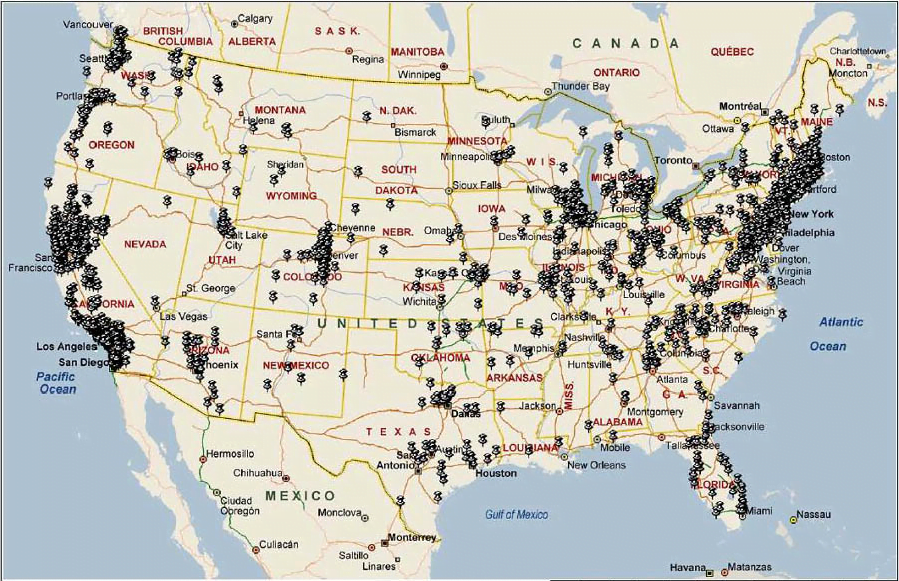
Whole House Fan Map
Using a whole-house fan properly can lower cooling costs, reduce indoor allergens, and freshen the atmosphere of your home. Whole-house fans work by moving hot air out through gables or other attic vents and drawing cooler air in through open windows or doors. As a result, Whole-house fans do not work very well when the outdoor temperature is not less than 10 degrees cooler than the indoor temperature or when the outdoor humidity is high. So what size whole house fan do I need?
In order to determine the size of the fan your home will need, calculate the square footage of your home. Most whole-house fan manufacturers will list the capability of the fan to the square footage of your house. A common belief is that a complete change of the air in the home should be accomplished every 3 or 4 minutes.
Most fans include a CFM (Cubic Feet of air per Minute) rating. The greater the CFM value, the more air it can move. Simply divide your home’s cubic feet by the fan’s CFM rating to determine the number of minutes it will take to exchange the air. A 2000 square foot home with 8-foot high ceilings will have all the air in the house completely changed in 8 minutes with a 2000 CFM fan.
Here’s how you arrive at those figures. A 2000 CFM fan moves 2000 cubic foot volume of air in a minute. A 2000 square foot house with an 8 foot high ceilings has 16,000 cubic feet of space (2,000 sq/ft area * 8 ft = 16,000 cubic feet). 16,000 cubic feet of space divided by the capacity of the fan, 2,000 cubic feet per minute, equals 8 minutes (16,000 cu/ft volume of air divided by 2,000 cu/ft of air moved per minute = 8 minutes to move that volume of air).
NOTE: When you use the whole house fan, you also clear out your attic of harmful moisture and heat build up, which will increase the functional life of your roof. A whole house fan costs pennies an hour to operate. It’s a cost-effective alternative to air conditioning. Click on the following for more info on properly sizing a whole house fans
The California Energy Commission seems to be pulling out all the stops to ensure that homeowners and businesses alike are up to speed on the new guidelines for the upcoming year. As of January 1st, 2014—all newly constructed dwellings will require some welcome energy efficient changes. Also known as Title 24, the unanimous vote to make some mandated improvements essentially means that saving even more money is now a reality. While Centric Air’s Whole House Fans have been getting the job done for years, the state is now finally convinced that using a combination of central air conditioning, multi-paned windows, solar paneling and whole house fans are all necessary elements for sustaining California’s energy efficient future.
The head of the CEC, Karen Douglas, concurs that Californians will be able to save noticeable amounts of money on utilities while staying comfortable during the process. She also says that greenhouse gas emissions will be significantly reduced as a result, thus providing a win/win situation in terms of the air we breathe and the money we’ll save, which will allow us to breathe the cleaner air a little easier.
For those of us who already own a home, thinking about securing the future is already etched into the first few pages of our playbooks. These initial investments are designed to result in a double-header sweep, which should end up producing a substantial collective yield in a timely fashion; in fact, as much as 25 percent more for homes and 30 percent more for businesses when compared to the previous year. Because the future also involves some solid planning, laying down a concrete budget for acquiring these items over time seems to the most realistic.
The Centric Air Whole House Fan undertaking will have more of an immediate positive impact; in cases where central air units can go on the blink—and they do— having an alternate forced air system can save the day. When combined with solar panels and reinforced windows, the number of kilowatt hours (KwH) in your home will immediately decrease. There are many homes in CA where implementing all of these devices is optional, yet the CEC is urging existing homeowners to invest in and also take advantage of these technologies that can perhaps provide the next two decade’s worth of relief.
California Energy Commission Title 24 is also receiving a thumbs-up from the California Building Industry Association (CBIA) and the Natural Resources Defense Council (NRDC) as well. While the overall added costs of installation are minimal, the CEC is making sure that these implementations will pay for themselves in relatively short periods of time, followed by homeowners watching their savings add up! To read the full report visit: Building Energy Efficient Standards
How Does a Whole House Fan Work Video Transcription:
So you’ve heard that a whole house fan can cool your home, but how exactly does it work?
Don’t worry. It’s a pretty simple concept with dramatic results.
Let’s say that it’s just an ordinary day. You go off to work or school and leave your home locked up for hours on end.
As the day heats up, so does your house.
Even as the sun begins to set and temperatures outside start to fall, the heat is trapped inside your house, keeping your home hot.
When you return from your day, you open your front door to a hot, stuffy house, even if it’s cool outside. Yuck!
That hot air is trapped inside your home with no way out. Since heat rises, the upstairs is even worse.
Regular fans just circulate the warm air in the home and cannot get rid of the hot air stuck in the attic.
But what if you had a CentricAir Whole House Fan? Watch what happens!
You simply open up a few windows and turn on the fan.
The fan is mounted in your attic, where most of the hot air is trapped.
The hot air in the home is sucked into the fan and pushed into the attic and out the attic vents.
At the same time, the fresh, outdoor cool air is drawn in, dramatically lowering the temperature in the home.
Now let’s see how it works on a single story home. The hot air goes out, and the cool air comes in. Simple and effective.
Before you know it, your home is comfortable again, for only a fraction of the cost of air conditioning. “Ahhhhh”
You don’t need to sleep in a hot, stuffy bedroom anymore!
A CentricAir Whole House Fan is quiet, effective, energy-efficient, low cost, and the best solution to keep your home cool and happy.
 Our staff at Centric Air decided to get together and make a list of the many fun and exciting family activities for America’s upcoming 4th of July celebration. Although I won’t be able to name all of them, you’ll get a pretty good idea that we live in a place that loves to celebrate with traditional events and the ability to improvise along the way. While many people will have the day off—and possibly the entire weekend, they’ll certainly be taking advantage of the time well spent honoring Independence Day and all of the freedoms that come with being a proud American.
Pool parties! If you haven’t been invited to one or you’re not throwing one yourself, cooling off at the nearest lake is a great alternative. Public parks can also provide a place for the parents to get together for potluck picnics while the kids can test their throwing arms with the ever-popular water balloon fights. Baseball and softball games can include anyone who wants to play, and the good-old-fashioned potato sack races are always worth getting out the camera and recording some kooky footage. Board games such as Monopoly, checkers and chess are perfect for those who prefer relaxing while attempting to upstage their opponents.
County fairs are also a great place to be, and the many flavorful blue ribbon recipes will be on display and ready to sample. Seemingly countless chili cook-offs will also take center stage, meaning that it’s a good idea to bring some antacids with you, just in case.
Traditional American cuisine doesn’t stop there; barbeques will be fired up and ready to make their chefs look like seasoned grill-master professionals. Literally millions of burgers, dogs, and pieces of chicken will be devoured on this day, as well as countless racks of spare ribs and tri-tip roasts. Baked beans, loaded potato salad, and Cole slaw make great side dishes that go well with any of the above entrees.
Watching the sun drape over the horizon after an exciting day may provide a great deal of contentment, yet the fireworks displays about to take place all across the country will have most people on the edge of their seats. It’s always a good idea to check and see where the nearest pyrotechnics events will be, or setting off your own backyard display may end up being the talk of the neighborhood. Either way, our staff here at Centric Air would like to wish all of you a safe and happy Independence Day, and many more to come!
 From one homeowner to the rest, I’d like to start off by saying that all of us DIYers have something in common; the idea of paying someone else to do a job when we’re fully capable of doing it by ourselves makes us a little crazy. The old adage that says…if you want it done right, you may have to do it yourself—is a motto I live by, yet I also know my limits. I learned the hard way that installing my own whole house fan alone could’ve been done in a lot less time if I had a friend there to help. Take it from me. Having an extra set of hands on the whole house fan installation job will save time and trouble, and your pride will still remain intact.
Although our DIY installation video combined with our instructional guide should provide you with most everything you need for whole house fan installations, there’s one important thing we cannot help with. You’ll have to find a reliable quick-thinking helper on your own!
After figuring where the cutting will take place, laying down a few drop cloths beforehand is a good way to catch loose paint chips, acoustic debris and/or sawdust from the ceiling.
The next measure is plain and simple; plug the fan unit into the nearest outlet to make sure that it’s working properly. Imagine having to do it all over again! It’s also important to have your AC outlet in the attic securely fastened with a solid faceplate before doing the heavy lifting.
The biggest problem I had with whole house fan installation involved hoisting the fan into my attic—all by myself! After about a dozen futile attempts and a pounding headache over the course of an hour, I finally asked my neighbor Bob for some help. The smallest of two-man jobs took only two minutes to fit the fan through the opening. So I learned the hard way, but it ended up teaching me a few things along the way. Bob also helped me with a few other things, such as handing me the tools, screws, nuts and bolts as I needed them. It also helped having a second opinion, and we had fun doing it. Thanks Bob!
Having all the necessary tools displayed at the beginning of our instructional video are imperatives, which is the first part of an optional checklist. The step-by-step setup procedure can help to avoid skipping a step, which has been known to happen.
It’s also a good idea to make sure that all of your tools are out of the attic before mounting the fan grille. This may seem like a small detail, but I’ve heard some stories about tools that have been inadvertently misplaced.
Hopefully these whole house fan installation pointers will save all of our DIYers some time while avoiding unnecessary aggravation. Hiring a handyman or a contractor is also an option, but the do-it-your-self mentality in all of us is something to be proud of!
 From all of us here at Centric Air, we’d like to show our appreciation by paying homage all of the dedicated fathers who work so hard to make life better for everyone. To all dads, we’d like to let you know that your hard work doesn’t go unnoticed, but also the fact that helping to raise a family requires wisdom and patience. You’re also a teacher, a lifelong guide—and a role model as well. Day in and day out, all of the things that fatherhood brings, you’re there to restore order and handle each situation with an even-keeled perspective. What you’ve learned through the years will be passed along to those who look up to you while giving you the respect that you deserve. From doing the legwork to helping the kids with their homework, your contributions to your family and your community should be recognized at least once a year.
Because Father’s Day is so close to the official arrival of summer, we know how important it is to stay cool, especially during the dog days when temperatures can reach 100° or more. Aside from running through the sprinklers and/or jumping in the pool to beat the heat, we’re certainly glad that our whole house fans have been able to assist in keeping the inside of your home at a desirable level. With that being said, we’d also like to point out that there are a few other ways to cool off when you’re outside battling the rising temps.
Most everyone knows that draping a damp washcloth around the back of your neck can provide some sort of relief, yet the good old-fashioned ice pack can come in handy for more than just aching muscles. The inside of the wrist area located right next to the palm of your hand is extremely temperature-sensitive, which is where your pulse can be most easily felt. When the heat gets to be a little too much, simply apply some light pressure to the inside either wrist with an ice pack. After a few minutes, you should be able to feel the difference. Although this may not work for everybody, most people are impressed with the results. Dads who already know about this procedure are also aware that if no ice pack is available, a cold bottle of water or a cold can of soda should also do the trick. Dads know stuff.
We’d also like to thank the dads who’ve played an instrumental role in helping us improve our customer service program. Your comments are taken seriously, and we do our best to make sure that your input is not only heard, but applied to help future customers who may be in need of some advice.
From our staff here at Centric Air, happy Father’s Day, and thank you for letting us take care of your cooling needs!
 Gearing up for the summer involves many things, but most of all it translates into having as much fun as possible. Although energy efficiency isn’t the most exciting thing in the world, the money you’ll save from conserving energy may allow you to save enough cash to buy that new barbeque you’ve been waiting to get your hands on. And this is a twofold endeavor; going into the yard and grilling your favorites not only gets the entire family involved, it also gives your indoor cooking appliances a much-needed rest.
Imagine how much electricity it takes to turn on the stove, the range or the oven—or all three at once, but also the amount of juice required for lighting up the kitchen and the dining area. Add some running water to the list and your utility bills may look similar to your monthly bank statement. There are many ways to cut back on energy usage this summer without having to suffer from the lingering effects of overheating. Frequent traditional summer barbeques offer more than just the great tasting food; they’re actually saving you money. Before firing up the grill, making sure that the inside of the house is cool should be a priority.
One of the reasons our Whole House Fans work so well during the dog days is because our customers take a little extra time to become familiar with the energy conservation process. The windows in your home become an important part of it all; some windows are prone to retaining the sun’s warmth throughout the course of the day, which can heat up the house quickly. Keeping the hot air out while letting room temps stay relatively cool is when the Whole House Fan does its job. Sometimes it’s best to open the upstairs windows half-way while the House Fan pushes the warm air out of the house. Because warm air has a tendency to rise and become trapped inside your home, any one of our Whole House Fan units will be able to help regulate room temps to a comfortable level—all summer long.
Following these simple energy efficiency steps with some consistency should eventually turn into a second-nature routine. Not only should you see a dramatic reduction in your overall energy costs, you’ll also be able to feel the difference without having to use your AC unit as often as you used to. Knowing that you’ve taken some of the necessary steps to make the summer more enjoyable is well worth the minimal effort it takes to actually be energy efficient.
 Greetings, and welcome to the Centric Air Whole House Fan blog. We’re aware of the fact that saving money is always a primary concern, especially when summertime cooling costs can take a big chunk out of your wallet. You can always sweat it out and be uncomfortable for months on end, or you can take a look into our product line and see how to keep cool and save money by using this technology. Even if you already have central air conditioning, our ventilation systems are designed to keep the house consistently cooler during the hottest months of the year. What does all of this mean? Well, it’s pretty simple; our Whole House Fan units don’t replace central air systems—they simply act as sources of naturally flowing air that can significantly reduce AC usage during peak hours, which can help homeowners save a bundle.
We’re really proud of our EconoCool 2.0 house fan model and all that it has to offer. It’s great for homes up to 1800 square feet, and it only requires a minimum of 2 ½ square feet of attic space. Also known as one of the quietest fans on the market, it costs about $0.02 cents per hour to run while furnishing 30 percent more power! The fan motor is backed by a 10-year warranty and its back draft damper virtually seals the attic air off from the rest of the house. The single speed remote is optional, but it’s free! The system can also be controlled by a standard household base set-up as well, and the installation process is relatively simple, which can be seen in our DIY video.
You can also visit our FAQ section to help answer any questions about our products, as well as some tips on how to achieve the best possible air circulation for your home. We’re here to help, so don’t be shy!
Sometimes it’s hard to know what you’re getting into before you start a DIY project. We don’t want installing your Whole House Fan to be one of those bigger-than-expected projects, so we made a whole house exhaust fan installation video to show you how simple and straight forward the job is. Check out the installation video online.